We have compiled a list of manufacturers, distributors, product information, reference prices, and rankings for Plastic Additives.
ipros is IPROS GMS IPROS One of the largest technical database sites in Japan that collects information on.

Plastic Additives Product List and Ranking from 6 Manufacturers, Suppliers and Companies | IPROS GMS

Last Updated: Aggregation Period:Feb 18, 2026~Mar 17, 2026
This ranking is based on the number of page views on our site.

Plastic Additives Manufacturer, Suppliers and Company Rankings

Last Updated: Aggregation Period:Feb 18, 2026~Mar 17, 2026
This ranking is based on the number of page views on our site.

  1. ピーライフ・ジャパン・インク Tokyo//Resin/Plastic
  2. null/null
  3. KGテクノサービス Saitama//Resin/Plastic
  4. 4 null/null
  5. 5 荒川化学工業 機能性コーティング事業部 Osaka//Resin/Plastic

Plastic Additives Product ranking

Last Updated: Aggregation Period:Feb 18, 2026~Mar 17, 2026
This ranking is based on the number of page views on our site.

  1. Unraveling the decomposition mechanism! Biodegradable plastic additive "P-Life"
  2. Field test results of the microbial plastic additive "P-Life". ピーライフ・ジャパン・インク
  3. Resin additives, plastic additives, comprehensive
  4. 4 Plastic additive "PLAFIT" 荒川化学工業 機能性コーティング事業部
  5. 5 Granting biodegradability to non-decomposable plastics | High-performance plastic additives KGテクノサービス

Plastic Additives Product List

1~30 item / All 32 items

Displayed results

Microbial Decomposition Plastic Additive 'P-Life' Leaching and Material Test Results

FDA-compliant dissolution tests are conducted using n-hexane and xylene dissolution tests!

We would like to introduce the results of various elution tests and material tests for our biodegradable plastic additive "P-Life." The tests conducted include "FDA-compliant elution tests" and "Food Sanitation Act-compliant material tests and elution tests." All test items, including the n-hexane elution test of the "FDA-compliant elution tests" and the material tests of the "Food Sanitation Act-compliant material tests and elution tests," have received a "pass" evaluation. 【Test Overview (Excerpt)】 < FDA-compliant Elution Test > ■ Sample: P-Life added HDPE film ■ Test Method: FDA 21 CFR 177.1520 (Regulations concerning containers and packaging that come into contact with food) ■ Testing Organization: Hong Kong Productivity Council *For more details, please refer to the related links or feel free to contact us.

  • plastic
  • Plastic Additives

Added to bookmarks

Bookmarks list

Bookmark has been removed

Bookmarks list

You can't add any more bookmarks

By registering as a member, you can increase the number of bookmarks you can save and organize them with labels.

Free membership registration

Field test results of the microbial plastic additive "P-Life".

In the climate of Southeast Asia, decomposition was confirmed in about three months!

We would like to introduce the field test (outdoor exposure) of our microbial degradation plastic additive, "P-Life." We conducted a degradation test in an outdoor environment using seedling bags (made of polyethylene) with the P-Life additive. Degradation was confirmed in approximately three months under the climate of Southeast Asia. Please feel free to contact us if you have any inquiries. [Test Details] ■ Conducted a degradation test in an outdoor environment using seedling bags (made of polyethylene) with the P-Life additive. *For more details, please refer to the related links or feel free to contact us.

  • plastic
  • Plastic Additives

Added to bookmarks

Bookmarks list

Bookmark has been removed

Bookmarks list

You can't add any more bookmarks

By registering as a member, you can increase the number of bookmarks you can save and organize them with labels.

Free membership registration

Shelf life of the microbial decomposition plastic additive "P-Life"

The period for maintaining the quality of the product lasts until the point when decomposition begins!

We would like to introduce the shelf life of our microbial degradation plastic additive, "P-Life." Knowing the product's lifespan is a very important matter when dealing with microbial degradation plastics in general. The shelf life of the product is defined as the period until the degradation begins. 【Method for Measuring Shelf Life】 1. Conduct a heat acceleration test at 80°C in a gear oven for each product sample. 2. Confirm the point at which degradation begins from the changes in the sample's properties. 3. Convert that time into the duration for storage at room temperature to predict the shelf life. *For more details, please refer to the PDF document or feel free to contact us.

Added to bookmarks

Bookmarks list

Bookmark has been removed

Bookmarks list

You can't add any more bookmarks

By registering as a member, you can increase the number of bookmarks you can save and organize them with labels.

Free membership registration

Microbial Decomposition Plastic Additive 'P-Life' *Technical Data Available

Complies with Food Sanitation Act Notification No. 370, as well as with U.S. FDA and European RoHS directives! *Research has been conducted using straws containing this product from Ito En, leading to the identification of decomposition bacteria.

"P-Life" is a groundbreaking additive that leads non-biodegradable plastics, such as polyethylene and polypropylene, to become biodegradable plastics through microbial decomposition. This additive is made from raw materials derived from plant oils (biomass), and since the addition amount is from 1.5%, it enables the production of microbial biodegradable plastic products at a low cost. We also offer a service to test the time frame until the product becomes inconsistent, including how much the variation changes with different addition amounts when companies that purchase the raw materials start manufacturing products. By adding this product, it is possible to convert non-biodegradable plastic materials into biodegradable ones. Additionally, a joint research team from Keio University, Ito En, and P-Life Japan Inc. has conducted research using straws containing this product and identified the decomposition bacteria. We also handle cushioning material "Rice Wrap" made from processed rice. [Applications] ■ Shopping bags, garbage bags, food trays, packaging materials, etc. *For more details, please download the PDF or feel free to contact us.

  • Other additives
  • Biodegradable plastics
  • Plastic Additives

Added to bookmarks

Bookmarks list

Bookmark has been removed

Bookmarks list

You can't add any more bookmarks

By registering as a member, you can increase the number of bookmarks you can save and organize them with labels.

Free membership registration

[Data] Additives for Thermoplastic Plastics <For Compounders>

Introducing recommended products for flame retardants and barrier properties of thermoplastic elastomers!

In this document, we introduce a selection chart for additives for thermoplastic plastics (for compounders). It includes products for the wetting and dispersion of polyethylene, polypropylene, and polyamide, as well as coupling agents, flame retardant additives, and light stability. Additionally, it features thermoplastic elastomers and technical polyesters (such as PET and PBT), as well as liquid color masterbatches. We encourage you to read it. [Contents (partial)] ■ Polyethylene ■ Polypropylene ■ Polyamide ■ Thermoplastic elastomers ■ Technical polyesters (PET, PBT, etc.) *For more details, please download the PDF or feel free to contact us.

  • Other additives
  • Plastic Additives

Added to bookmarks

Bookmarks list

Bookmark has been removed

Bookmarks list

You can't add any more bookmarks

By registering as a member, you can increase the number of bookmarks you can save and organize them with labels.

Free membership registration

[Information] Additives for Thermoplastic Plastics <For Converters>

Introducing recommended products for thermal stabilization and slip properties of polyethylene and polypropylene!

This document introduces a selection chart for additives for thermoplastic plastics (for converters). It includes products for polyethylene and polypropylene coupling, as well as odor reduction, scratch resistance, flame retardancy, light stabilization, crystallization nucleating agents, processing aids, antistatic properties, and slip properties. The content is designed to be easy to reference when selecting products, so please take a moment to read through it. [Contents] ■ Polyethylene ■ Polypropylene *For more details, please download the PDF or feel free to contact us.

  • Other additives
  • Plastic Additives

Added to bookmarks

Bookmarks list

Bookmark has been removed

Bookmarks list

You can't add any more bookmarks

By registering as a member, you can increase the number of bookmarks you can save and organize them with labels.

Free membership registration

P-Life Microbial Decomposition Plastic Additive

An additive that promotes the microbial degradation of polyolefin resins, which are difficult to decompose by microorganisms!

"P-Life" is a highly safe microbial degradation plastic additive developed based on years of testing and verification in various countries around the world. The basic addition amount is 1.5% or more (masterbatch), enabling the production of microbial degradation resin products at a low cost. The components are registered in the national positive list based on the revised Food Sanitation Act (updated April 2022). It also complies with the Ministry of Health, Labour and Welfare Notification No. 370 of the Food Sanitation Act. 【Features】 ■ An additive based on fatty acids refined from plant oils (biomass) ■ Microbial degradation resins include polyethylene (PE) and polypropylene (PP) ■ The physical properties of the added resin products are equivalent to those of standard resin products ■ The microbial degradability of the added plastic products has been verified according to JIS K6955 (ISO 17556) *For more details, please refer to the PDF materials or feel free to contact us.

Added to bookmarks

Bookmarks list

Bookmark has been removed

Bookmarks list

You can't add any more bookmarks

By registering as a member, you can increase the number of bookmarks you can save and organize them with labels.

Free membership registration

About P-Life microbial degradation plastic additives and their market development.

Highly safe microbial degradation plastic additives! Includes results of microbial degradation tests in soil environments.

This document provides an explanation of P-Life biodegradable plastic additives and their market development. It includes information on P-Life biodegradable plastic technology, product lineup, functions, and microbial decomposition mechanisms. Since 2003, sales of P-Life have started primarily in the Asia-Pacific region, and currently, the sales area has expanded to all regions of the world. 【Contents】 ■ Company Overview ■ P-Life Biodegradable Plastic Technology ■ P-Life Product Lineup ■ Functions and Microbial Decomposition Mechanisms of P-Life (Additives) ■ Results of Microbial Decomposition Tests in Soil Environment Part 1 *For more details, please refer to the PDF document or feel free to contact us.

Added to bookmarks

Bookmarks list

Bookmark has been removed

Bookmarks list

You can't add any more bookmarks

By registering as a member, you can increase the number of bookmarks you can save and organize them with labels.

Free membership registration

P-LIFE GREEN 20 Masterbatch Physical Property Information

Biodegradable resin includes polyethylene and polypropylene! Microbial degradation plastic additive 'P-Life'.

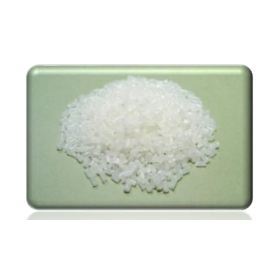
We would like to introduce the physical property information of the "P-Life GREEN 20" masterbatch that we handle. The biodegradable resin consists of polyethylene and polypropylene, with a melting point of 110°C. It is applicable to all processing methods of polyethylene and polypropylene, including inflation, extrusion, injection molding, foaming, and lamination. 【Features】 ■ Composition: 20% active ingredient of P-Life + 80% polyethylene ■ Appearance: Pellet form ■ MI: 8.1 (as base resin) ■ Color: Beige ■ Odor: None *For more details, please refer to the PDF document or feel free to contact us.

Added to bookmarks

Bookmarks list

Bookmark has been removed

Bookmarks list

You can't add any more bookmarks

By registering as a member, you can increase the number of bookmarks you can save and organize them with labels.

Free membership registration

P-LIFE PP 10 Masterbatch Physical Property Information

The appearance is pellet form, with a melting point of 165°C! Microbial degradation plastic additive 'P-Life'.

We would like to introduce the physical property information of our "P-Life" PP 10 masterbatch. It is composed of 10% active ingredient from P-Life and 90% polypropylene, with a recommended processing temperature of 165°C to 300°C. It is applicable for general processing of polypropylene, including extrusion, inflation, and injection molding. 【Features】 ■ Composition: 10% active ingredient from P-Life + 90% polypropylene ■ Appearance: Pellet form ■ MI: 30 (as base resin) ■ Color: Beige ■ Odor: None *For more details, please refer to the PDF document or feel free to contact us.

Added to bookmarks

Bookmarks list

Bookmark has been removed

Bookmarks list

You can't add any more bookmarks

By registering as a member, you can increase the number of bookmarks you can save and organize them with labels.

Free membership registration

P-Life has successfully obtained polypropylene-decomposing bacteria!

To all companies working on plastic pollution measures: The possibilities for environmentally friendly plastic products expand with P-Life technology.

Our research team, in collaboration with Keio University, Ito En, Inc., SI Resin Industry Co., Ltd., and the Keio University Advanced Molecular Research Center, has successfully obtained a degradation bacterium for polypropylene (PP) that incorporates the biodegradable additive "P-Life." This research achievement represents an important step towards the microbial degradation treatment of non-degradable polyolefin-based plastics. Furthermore, the degradation bacteria attracted by the addition of P-Life are expected to effectively decompose and remove microplastics generated from polyolefin-based plastics, helping to alleviate their accumulation in the global environment. 【Features】 - Multiple degradation bacteria discovered that are compatible with P-Life added plastics - Capable of degrading a wide range of materials, including polypropylene and polyethylene - Safety of the products generated after plastic degradation being metabolized by microorganisms - Effectiveness of P-Life in promoting microbial degradation has been demonstrated *For more details, please refer to the materials. Feel free to contact us with any inquiries.

Added to bookmarks

Bookmarks list

Bookmark has been removed

Bookmarks list

You can't add any more bookmarks

By registering as a member, you can increase the number of bookmarks you can save and organize them with labels.

Free membership registration

Microbial Decomposition Plastic Additive 'P-Life'

Complies with Food Sanitation Act Notification No. 370, U.S. FDA, and European RoHS Directive! Suitable for various applications.

"P-Life" is a groundbreaking additive that leads non-biodegradable plastics, such as polyethylene and polypropylene, to microbial degradation. It is made from additives derived from plant oils (biomass), with an addition amount of 1.5% or more, allowing for the low-cost production of microbial degradation plastic products. By adjusting the addition amount, the degradation period can be controlled, and it can be used without changing the processing conditions in existing processing equipment. 【Features】 ■ Economic efficiency ■ Quality control ■ Safety ■ Retention of physical properties ■ Processability *For more details, please download the PDF or feel free to contact us.

  • Other additives
  • Biodegradable plastics
  • Plastic Additives

Added to bookmarks

Bookmarks list

Bookmark has been removed

Bookmarks list

You can't add any more bookmarks

By registering as a member, you can increase the number of bookmarks you can save and organize them with labels.

Free membership registration

[Information] Additives for Plastics Additives for Thermoplastic Resins

Introducing various resin additive mixing compacting technologies and scratch resistance enhancers!

This document includes information about "Additives for Plastics and Additives for Thermoplastic Resins." We introduce the high-performance plastic additive "BYK-MAX," which can improve colorability and color strength, as well as melt viscosity and processability, through the use of "wetting dispersants." It also enhances the stability of the additive blend and improves quality through uniform pre-dispersion. Additionally, we feature "layered inorganic additives" that can achieve increased rigidity and reduced linear expansion with a small amount of addition. [Contents (excerpt)] ■ Wetting dispersants ■ Coupling agents and compatibilizers ■ Layered inorganic additives ■ VOC and odor stripping agents ■ Scratch resistance enhancers *For more details, please download the PDF or feel free to contact us.

  • Other additives
  • Plastic Additives

Added to bookmarks

Bookmarks list

Bookmark has been removed

Bookmarks list

You can't add any more bookmarks

By registering as a member, you can increase the number of bookmarks you can save and organize them with labels.

Free membership registration

[Information] Big Chemi Additives for Thermoplastic Resins

Introduction to high-performance plastic additives and scratch resistance enhancers!

This document includes "additives for thermoplastic resins" handled by Big Chemie Japan Co., Ltd. We introduce a variety of products, including the plastic modifier "SCONA," which can be based on various polymers, along with its features and examples of additive effects, as well as layered inorganic additives and wetting dispersants. There is also an additive selection chart available, which can be useful for product selection. [Included Content (Partial)] ■ Selection Chart for Additives for Thermoplastic Resin Compounds ■ SCONA Plastic Modifier ■ SCONA and PRIEX Product Lineup ■ Layered Inorganic Additives ■ Wetting Dispersants *For more details, please download the PDF or feel free to contact us.

  • Lubricants and additives
  • plastic
  • Plastic Additives

Added to bookmarks

Bookmarks list

Bookmark has been removed

Bookmarks list

You can't add any more bookmarks

By registering as a member, you can increase the number of bookmarks you can save and organize them with labels.

Free membership registration

Plastic Additive Blend "RECYCLOBYK Series"

Stabilization of physical properties during material recycling! Simplifying the ordering and inventory management of additives.

We offer the 'RECYCLOBYK series', a unique blend of various stabilizers used in plastic manufacturing, including antioxidants, UV absorbers, light stabilizers, lubricants, and compatibilizers. In pellet form, it is easy to use, and it contains compatibilizing components that minimize property degradation. It can be used for low-polarity plastic materials such as post-consumer recycled (PCR) and post-industrial recycled (PIR) plastics, as well as polyolefins and elastomers excluding polyester. 【Features】 ■ Unique blend of various stabilizers used in plastic manufacturing ■ Easy to use in pellet form ■ Contains compatibilizing components that minimize property degradation ■ Simplifies ordering and inventory management of additives *For more details, please download the PDF or feel free to contact us.

  • Lubricants and additives
  • plastic
  • Other environmental measures and recycling
  • Plastic Additives

Added to bookmarks

Bookmarks list

Bookmark has been removed

Bookmarks list

You can't add any more bookmarks

By registering as a member, you can increase the number of bookmarks you can save and organize them with labels.

Free membership registration

Plastic additive "PLAFIT"

Improving the affinity of dissimilar plastics! Exhibiting mechanical properties and water vapor barrier performance.

"PLAFIT" is a plastic additive made from the plant-derived natural resource "rosin." "Rosin" is an oligomer composed of hydrophobic groups with bulky structures and hydrophilic carboxyl groups within its molecules. High molecular weight plastics and highly filled plastics have low fluidity, which poses challenges in moldability. This product can improve fluidity while maintaining the mechanical properties of plastics. 【Features】 ■ Improves fluidity while maintaining the mechanical properties of plastics ■ Suitable for injection molding of thin-walled, low-temperature, high molecular weight plastics, and highly filled plastics. ■ Enhances compatibility between plastics with different polarities and between plastics and fillers ■ Improves the physical properties of plastic composite materials blended with polymer alloys and fillers *For more details, please download the PDF or feel free to contact us.

Added to bookmarks

Bookmarks list

Bookmark has been removed

Bookmarks list

You can't add any more bookmarks

By registering as a member, you can increase the number of bookmarks you can save and organize them with labels.

Free membership registration

Introduction to the features of the microbial plastic additive "P-Life".

Using ingredients registered in the national positive list of the Food Sanitation Act (updated April 2022)!

We would like to introduce the features of our microbial biodegradable plastic additive, "P-Life." This additive is made from raw materials derived from plant oils (biomass). By adjusting the amount of P-Life added, it is possible to control the degradation period. The addition amount starts from 1.5%, allowing for the production of microbial biodegradable plastic products at a low cost. 【Features】 ■ Enables the production of microbial biodegradable plastic products at a low cost (economic efficiency) ■ Allows control over the degradation period (quality control) ■ Complies with Food Sanitation Act Notification No. 370, as well as the US FDA and European RoHS directives (safety) ■ Does not alter the properties of the plastic (retention of physical properties) ■ Can be used without changing processing conditions (processability) *For more details, please refer to the PDF materials or feel free to contact us.

Added to bookmarks

Bookmarks list

Bookmark has been removed

Bookmarks list

You can't add any more bookmarks

By registering as a member, you can increase the number of bookmarks you can save and organize them with labels.

Free membership registration

Usage, testing methods, and analysis methods of plastic additives.

★From types of plastic additives to regulatory frameworks and reverse engineering ★Separation analysis necessary for identifying additives in plastics

**Lecturers** **Part 1**: Yosuke Yamada, Clariant Japan Ltd. **Part 2**: Fumihiko Yazaki, Ph.D., Technical Advisor, High-Tech Promotion Center, Inc. **Part 3**: Naoki Oguri, Ph.D., Chairman, Japan Analytical Industry Co., Ltd. **Target Audience**: From beginners in plastic additives to professionals who wish to learn again. **Venue**: Kawasaki City Educational and Cultural Center, Room 2 [Kanagawa, Kawasaki] 12-minute walk from JR/Kyuko "Kawasaki Station" **Date and Time**: August 29, 2011 (Monday) 10:30 AM - 4:00 PM **Capacity**: 30 people. *Registration will close once full. Please apply early.* **Participation Fee**: **[Early Bird Discount Price]** 51,450 yen (tax included, including text costs) for up to 2 people from one company. *Limited to Tech-Zone members who apply by August 18. Membership registration is free.* *After August 18, the [Regular Price] will be 54,600 yen (tax included, including text costs) for up to 2 people from one company.* ◆ If 3 people from the same organization apply, the fee is 69,300 yen.

  • Company:AndTech
  • Price:10,000 yen-100,000 yen
  • Technical Seminar
  • Plastic Additives

Added to bookmarks

Bookmarks list

Bookmark has been removed

Bookmarks list

You can't add any more bookmarks

By registering as a member, you can increase the number of bookmarks you can save and organize them with labels.

Free membership registration

Agricultural Microbial Degradable Plastic Additive 'P-Life'

Contributing to soil improvement! Reducing plastic waste to lessen environmental impact.

As the global environmental issues become more serious, reducing plastic waste in the agricultural sector is an urgent challenge. Many plastic products are used in agriculture, including packaging for pesticides and fertilizers, and materials for greenhouse cultivation. These plastics can remain in the soil, potentially causing environmental pollution and soil degradation. The microbial biodegradable plastic additive 'P-Life' is a groundbreaking product that contributes to solving these challenges. 【Usage Scenarios】 - Pesticide and fertilizer packaging: Traditional plastic packaging can remain in the soil, potentially causing environmental pollution and soil degradation. - Materials for greenhouse cultivation: Plastic materials used for temperature control and sunlight adjustment in greenhouses are durable and not easily decomposed. - Agricultural films: Agricultural films used for soil moisture retention and weed suppression often remain in the soil for extended periods. - Agricultural nets: Agricultural nets used for protecting crops and preventing damage from birds and animals are durable and not easily decomposed. 【Effects of Introduction】 By adding 'P-Life' to plastic products, they are decomposed by microorganisms and return to nature without negatively impacting the soil. This helps reduce environmental burden and achieve sustainable agriculture.

  • Other additives
  • Biodegradable plastics
  • Plastic Additives

Added to bookmarks

Bookmarks list

Bookmark has been removed

Bookmarks list

You can't add any more bookmarks

By registering as a member, you can increase the number of bookmarks you can save and organize them with labels.

Free membership registration

Microbial Degradable Plastic Additive for Automobiles 'P-Life'

Next-generation plastic additives that reduce environmental impact and achieve sustainability.

In the automotive industry, various plastic products, such as interior materials, are used. However, these plastics are difficult to decompose naturally and contribute to environmental issues. Therefore, we have developed a microbial-degradable plastic additive called 'P-Life.' By adding 'P-Life' to plastic products, we can promote microbial decomposition and reduce environmental impact. 【Usage Scenarios】 - Automotive interior materials: Traditional plastic materials have a significant environmental impact upon disposal. - Automotive parts: We want to achieve both weight reduction and lower environmental impact. - Automotive-related products: We aim to improve recycling rates. 【Benefits of Implementation】 By introducing 'P-Life,' the automotive industry can significantly reduce its environmental impact. - Waste reduction: Microbial decomposition can decrease plastic waste. - Improved recycling rates: Decomposed plastics are returned to the soil, contributing to resource circulation. - Enhanced sustainability: Reducing environmental impact can improve corporate image.

  • Other additives
  • Biodegradable plastics
  • Plastic Additives

Added to bookmarks

Bookmarks list

Bookmark has been removed

Bookmarks list

You can't add any more bookmarks

By registering as a member, you can increase the number of bookmarks you can save and organize them with labels.

Free membership registration

Microbial Degradable Plastic Additive for Home Appliances 'P-Life'

Reduce environmental impact and enhance product value! Additives that change the future of plastics.

Plastic parts of home appliances have become a significant issue in environmental problems. Discarded plastics pollute soil and oceans and take a long time to decompose. Therefore, our developed microbial biodegradable plastic additive, 'P-Life', is a groundbreaking solution that reduces the environmental impact of plastic products and achieves sustainability. 【Usage Scenarios】 - Appliance casings: Traditional plastic casings have a large environmental impact upon disposal, so there is a demand for a switch to biodegradable materials. - Appliance parts: By making small components like remote controls and buttons biodegradable, we can contribute to improving recycling rates. - Appliance packaging: Traditional plastic packaging has a large environmental impact upon disposal, so there is a demand for a switch to biodegradable materials. 【Effects of Implementation】 By adding 'P-Life', plastic parts of home appliances can be made from microbial biodegradable materials. This significantly reduces the environmental impact at the time of disposal and contributes to the realization of a circular society. Additionally, it can enhance product value in response to the growing environmental awareness among consumers.

  • Other additives
  • Biodegradable plastics
  • Plastic Additives

Added to bookmarks

Bookmarks list

Bookmark has been removed

Bookmarks list

You can't add any more bookmarks

By registering as a member, you can increase the number of bookmarks you can save and organize them with labels.

Free membership registration

Biodegradable Plastic Additive for Toys 'P-Life'

Achieving environmentally friendly biodegradable toys at a low cost!

Plastic toys, when discarded, pollute soil and oceans, causing environmental issues. This is where biodegradable plastics, which can be broken down by microorganisms, come into focus. 'P-Life' is a groundbreaking additive that can impart biodegradability simply by being added to conventional plastics. 【Usage Scenarios】 - Application: Biodegradable toys - Locations: Toy manufacturers, toy retailers - Challenges: Environmental pollution caused by discarded plastic toys, addressing sustainability 【Effects of Implementation】 By adding 'P-Life', it is possible to manufacture environmentally friendly biodegradable toys. - Environmental consideration: Reduces environmental pollution after disposal and contributes to the protection of the Earth's environment - Improved brand image: Gains consumer trust as an environmentally friendly product - Strengthened competitiveness: Appeals to sustainability efforts and differentiates from competitors

  • Other additives
  • Biodegradable plastics
  • Plastic Additives

Added to bookmarks

Bookmarks list

Bookmark has been removed

Bookmarks list

You can't add any more bookmarks

By registering as a member, you can increase the number of bookmarks you can save and organize them with labels.

Free membership registration

Granting biodegradability to non-decomposable plastics | High-performance plastic additives

\Patent Granted/ A biodegradable additive that can be used with current equipment. By adjusting the amount of additive, you can control the quality retention period and decomposition rate of PE and PP products.

The additive "P-Life" is a highly safe additive developed based on years of testing and verification conducted in various countries around the world. It imparts microbial degradability to difficult-to-decompose plastic materials such as polyethylene (PE) and polypropylene (PP), which are extremely challenging to break down naturally. ★Obtained Japanese patents No. 6777343 and No. 6993737★ ★A joint industry-academia team from Keio University, Ito En Co., Ltd., and P-Life Japan, Inc. conducted research using straws containing our product and identified the decomposition bacteria for polypropylene with "P-Life" added. This document explains the development of the additive "P-Life" and its market deployment. It also provides detailed images and information on microbial degradation test results in soil environments, environmental certifications and national certifications in various countries, and case studies of adoption overseas. *For more details, please download the PDF or feel free to contact us. We have also summarized the strengths of the P-Life additive.

  • Other additives
  • Biodegradable plastics
  • Plastic Additives

Added to bookmarks

Bookmarks list

Bookmark has been removed

Bookmarks list

You can't add any more bookmarks

By registering as a member, you can increase the number of bookmarks you can save and organize them with labels.

Free membership registration

Public certification of the microbial degradation plastic additive "P-Life".

Thanks to its reliable biodegradability, it has obtained national certifications and environmental marks in countries around the world!

We would like to introduce the public certification of our microbial degradation plastic additive, 'P-Life'. Numerous verifications of the microbial degradation of non-degradable plastics have been conducted, and due to its proven microbial degradability, it has obtained national certifications and environmental marks (Green Label) in various countries around the world. Please feel free to contact us if you have any inquiries. 【National Certifications and Environmental Marks (Green Label)】 ■ Kingdom of Sweden ■ UAE (United Arab Emirates) ■ Hong Kong ■ Kingdom of Saudi Arabia ■ Federative Republic of Brazil *For more details, please refer to the related links or feel free to contact us.

  • plastic
  • Plastic Additives

Added to bookmarks

Bookmarks list

Bookmark has been removed

Bookmarks list

You can't add any more bookmarks

By registering as a member, you can increase the number of bookmarks you can save and organize them with labels.

Free membership registration

Microbial Degradable Plastic Additive 'P-Life' for the Food Industry

Solving the plastic problem in food packaging! Reducing environmental impact for a safe future.

In the food industry, plastic is widely used as packaging material. However, plastic waste is one of the major factors causing environmental issues. Therefore, we have developed a microbial-degradable plastic additive called 'P-Life.' 'P-Life' reduces environmental impact by making the plastic in food packaging materials easier to decompose by microorganisms. 【Usage Scenarios】 - Food packaging materials (trays, containers, bags, etc.) - Food processing sites - Reduction of environmental impact - Improvement of recycling rates - Waste reduction 【Effects of Implementation】 By adding 'P-Life' to food packaging materials, the decomposition rate is improved compared to conventional plastics, significantly reducing environmental impact. It also contributes to increased recycling rates and waste reduction, helping to achieve a sustainable society.

  • Other additives
  • Biodegradable plastics
  • Plastic Additives

Added to bookmarks

Bookmarks list

Bookmark has been removed

Bookmarks list

You can't add any more bookmarks

By registering as a member, you can increase the number of bookmarks you can save and organize them with labels.

Free membership registration

"P-Life" microbial degradation plastic additive for beverages.

Promote the recycling of PET bottles! Reduce environmental impact and achieve sustainability.

As environmental issues become more serious, reducing plastic waste is an urgent challenge. In particular, the beverage industry uses a large number of PET bottles, and their disposal has become a significant burden. Therefore, we have developed a microbial degradation plastic additive called 'P-Life.' This additive promotes the decomposition of plastic products such as PET bottles, reducing environmental impact. 【Usage Scenarios】 * PET Bottles: Improved recycling rates, reduction of marine plastic waste * Beverage Containers: Reduction of environmental impact, contribution to sustainability * Food Packaging: Enhanced biodegradability, consideration for the environment 【Effects of Implementation】 By adding 'P-Life' to PET bottles, the decomposition rate improves compared to conventional plastics, leading to higher recycling rates. It also contributes to the suppression of marine plastic waste generation. Furthermore, by reducing environmental impact, it enhances corporate image and showcases commitment to sustainability.

  • Other additives
  • Biodegradable plastics
  • Plastic Additives

Added to bookmarks

Bookmarks list

Bookmark has been removed

Bookmarks list

You can't add any more bookmarks

By registering as a member, you can increase the number of bookmarks you can save and organize them with labels.

Free membership registration

Microbial Degradable Plastic Additive 'P-Life' for Cosmetics

Achieving environmentally friendly biodegradable containers! Promoting sustainability with P-Life.

As awareness of environmental issues increases, the cosmetics industry is also being called upon to take action towards sustainability. The disposal of plastic containers is a significant challenge, but the biodegradable plastic additive 'P-Life' is a groundbreaking solution that transforms conventional plastics into environmentally friendly materials. 【Usage Scenarios】 - Cosmetic containers: Reducing environmental impact, improving recycling rates - Cosmetic packaging: Contributing to sustainability, enhancing brand image - Cosmetic samples: Responding to the demand for environmentally friendly products 【Effects of Implementation】 By introducing 'P-Life', the biodegradability of cosmetic containers can be enhanced, reducing environmental impact. Additionally, promoting efforts towards sustainability contributes to improving brand image.

  • Other additives
  • Biodegradable plastics
  • Plastic Additives

Added to bookmarks

Bookmarks list

Bookmark has been removed

Bookmarks list

You can't add any more bookmarks

By registering as a member, you can increase the number of bookmarks you can save and organize them with labels.

Free membership registration

Microbial Degradable Plastic Additives for Daily Necessities Manufacturers

Solving the plastic waste problem! We support the creation of environmentally friendly products.

As awareness of environmental issues rises, the problem of plastic waste is becoming more serious. Manufacturers of everyday goods may be considering the introduction of biodegradable plastics to reduce environmental impact and meet consumer needs. The microbial degradation plastic additive "P-Life" is a groundbreaking product that transforms conventional plastics into biodegradable plastics that can be decomposed by microorganisms. 【Usage Scenarios】 - Shopping bags and plastic bags: Transform conventional plastic shopping bags and plastic bags into biodegradable materials. Reduce environmental impact and contribute to sustainability. - Food containers: Enhance the biodegradability of food containers and reduce environmental impact after disposal. Achieve environmentally friendly packaging. - Everyday goods: Improve the biodegradability of various everyday items such as shampoo bottles and detergent bottles, contributing to reduced environmental impact. - Others: Improve the biodegradability of a wide range of products, including toys and stationery, contributing to reduced environmental impact. 【Benefits of Introduction】 - Reduction of environmental impact: By adopting biodegradable plastics, the accumulation of plastic waste in soil and oceans is suppressed. - Response to consumer needs: Meet the needs of environmentally conscious consumers and contribute to enhancing brand image.

  • Other additives
  • Biodegradable plastics
  • Plastic Additives

Added to bookmarks

Bookmarks list

Bookmark has been removed

Bookmarks list

You can't add any more bookmarks

By registering as a member, you can increase the number of bookmarks you can save and organize them with labels.

Free membership registration